
360-degree virtual tours
Machine translation awaiting editorial review. Consult the original text when needed.
Eight landmarks between the Sahara and the capital and Tlemcen.
Descriptions and images from the official page. Virtual tours open on the external Matterport website when you click on the visit link.
Ghardaïa Castle (pronounced in Amazigh: Tgrdaït)
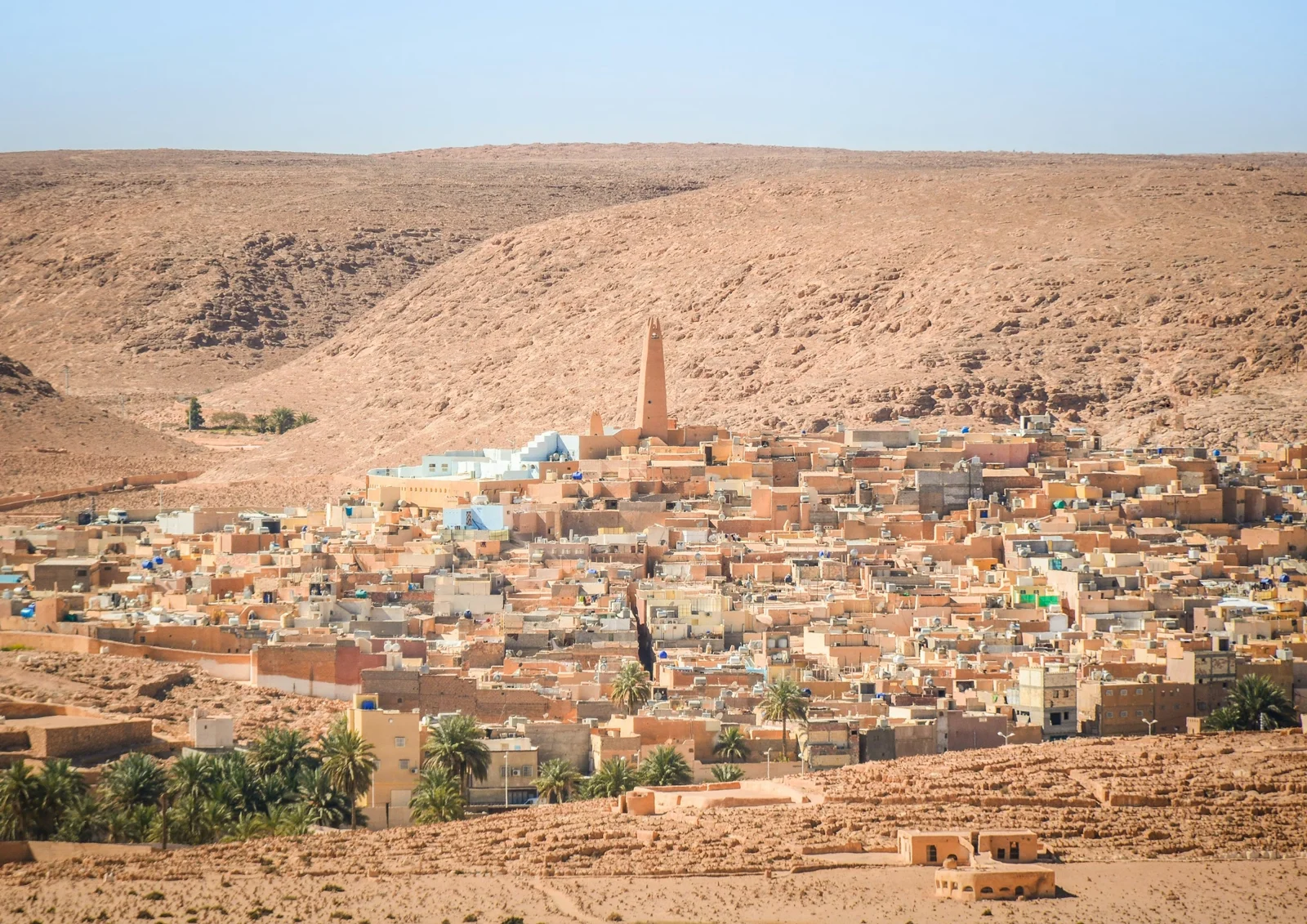
Ghardaïa Castle, locally known as Tghar daït, is a historic site located in the heart of the M’Zab Valley in southern Algeria, founded in 1048 CE by the Ibadis. The castle is characterized by its circular layout around a central mosque built on a rocky hilltop, reflecting architectural and social ingenuity. Houses were constructed from local clay and stone, arranged in narrow passages to provide shade and ventilation. The castle features an efficient system for storing provisions and distributing water, along with a central market and a local council known as "Al-Azabah." The castle remains inhabited, with its residents preserving the authentic M’Zab traditions. It is inscribed as a UNESCO World Heritage Site for its unique cultural, religious, and architectural heritage. Ghardaïa Castle offers a unique tourism experience for history and Saharan Algerian identity enthusiasts. ’ZabValley
Start the virtual tour — external site
Jinat Tikebawin (or Tinkobawin)
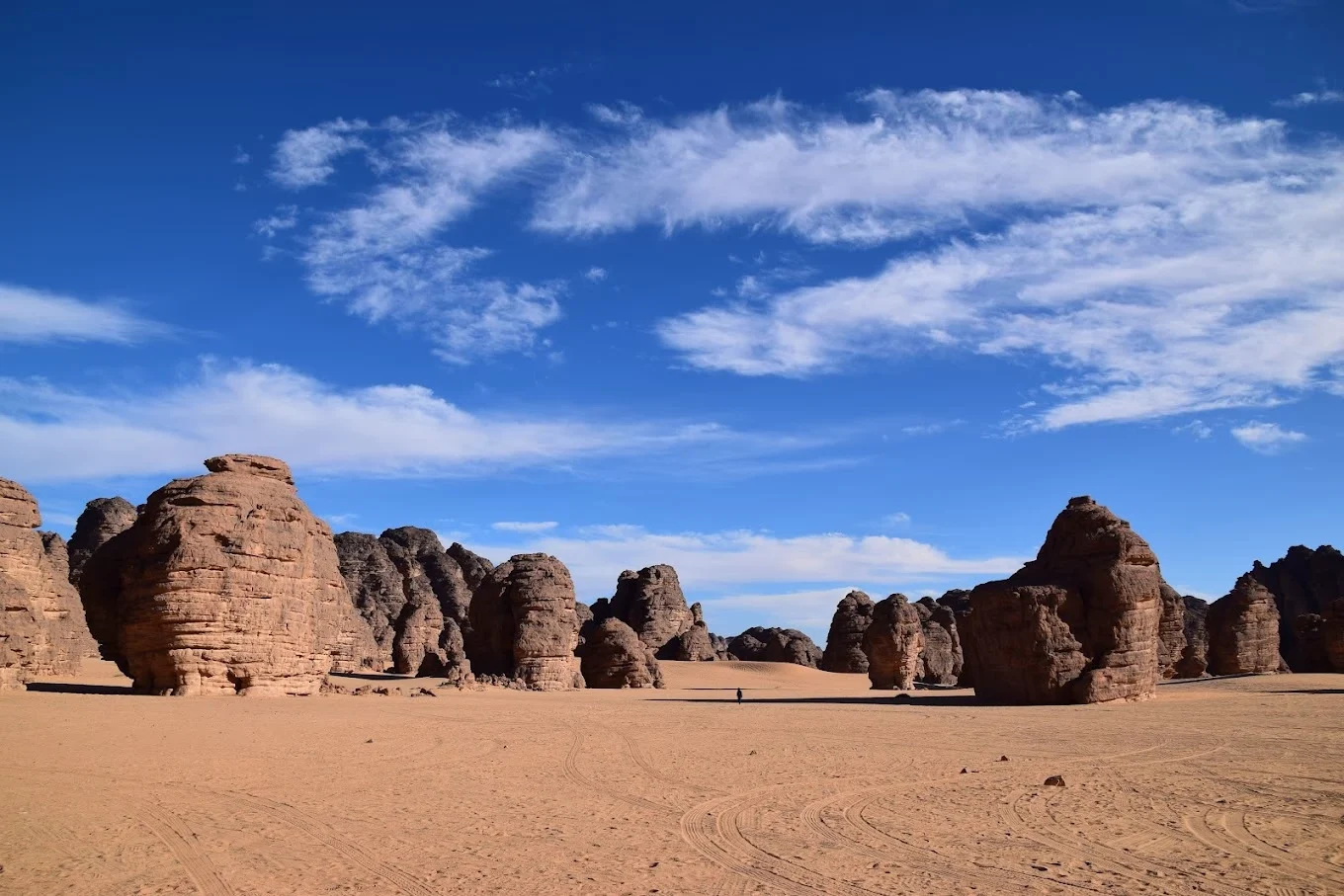
Tikobawin (or Tinkobawin) is one of the most beautiful desert oases in southern Algeria, located in Tamanrasset region within the Hoggar mountain range. Known for its breathtaking natural beauty and stunning landscapes blending golden sand dunes with black rock formations, it offers a unique natural canvas. Surrounded by towering granite cliffs and scattered palm trees, the area features natural springs that attract visitors seeking peace and serenity. Tikobawin is a favorite destination for hikers and nature lovers, providing an authentic desert experience far removed from urban noise. The region is also renowned for its spectacular sunsets and star-studded night skies, making it an ideal destination for photography and eco-tourism enthusiasts. Tikobawin stands as a living example of harmony between nature and traditional Saharan life.
Start the virtual tour — external site
Timimoun's Arm Castle
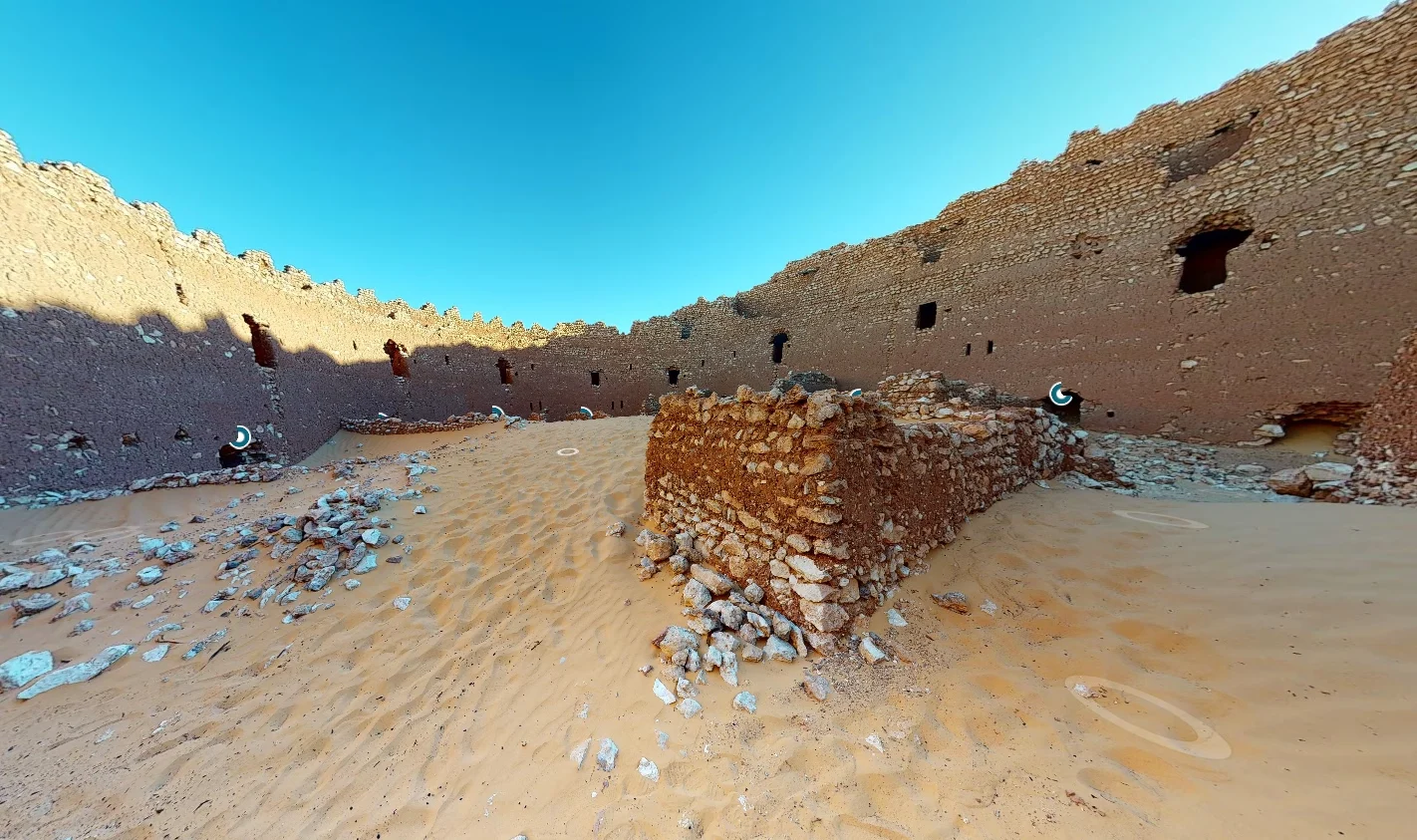
El Qasr al-Dira is one of the ancient palaces located in the Timimoun region, in the Adrar province in southern Algeria, serving as a living witness to the richness of Saharan Sudanese architecture. The palace is distinguished by its traditional construction using local red clay, giving it a unique hue that harmonizes with the "Red Valley" landscape, which Timimoun is renowned for. Built on a hilltop offering breathtaking panoramic views of the surrounding valleys, the palace features narrow alleys and closely clustered homes that reflect the community's spirit of solidarity. The palace is known for preserving traditional social customs, as some of its residents still live according to inherited practices passed down for centuries. It also serves as a significant tourist attraction due to its authentic design and stunning scenery. A visit to Qasr al-Dira offers visitors a journey through time, uncovering the lifestyle at the heart of Algeria's Sahara.
Start the virtual tour — external site
Al Riyas al-Hassan 23
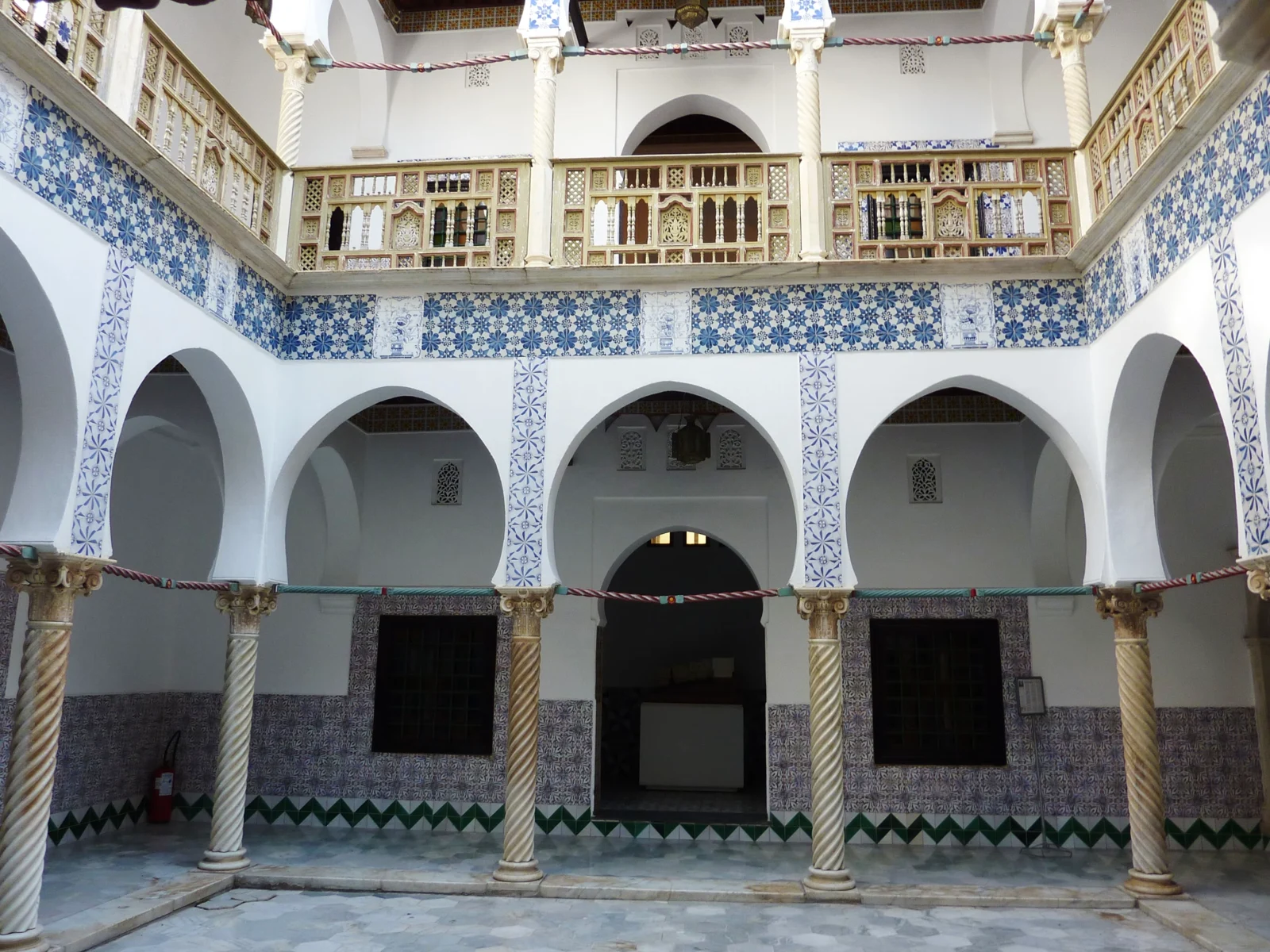
Riassas Palace, also known as Fort 23, is a prominent historical landmark located in the heart of Algiers, specifically in the coastal district overlooking the sea. The palace was built in the 16th century and served as the headquarters for the "Riassas of the Sea," naval commanders who led Algeria's naval forces during the Ottoman period. The palace features authentic Ottoman architecture, characterized by its ornate arches and interior courtyards adorned with traditional marble and ceramics. Its strategic location on the coastal front forms part of the defensive walls of the old city. The palace suffered years of neglect, but underwent a meticulous restoration process to reopen as a museum and cultural center highlighting Algeria's maritime history. Today, it stands as a symbol of Ottoman heritage in Algeria and is a significant cultural and tourist destination within the capital.
Start the virtual tour — external site
Qal'at al-Mansoura
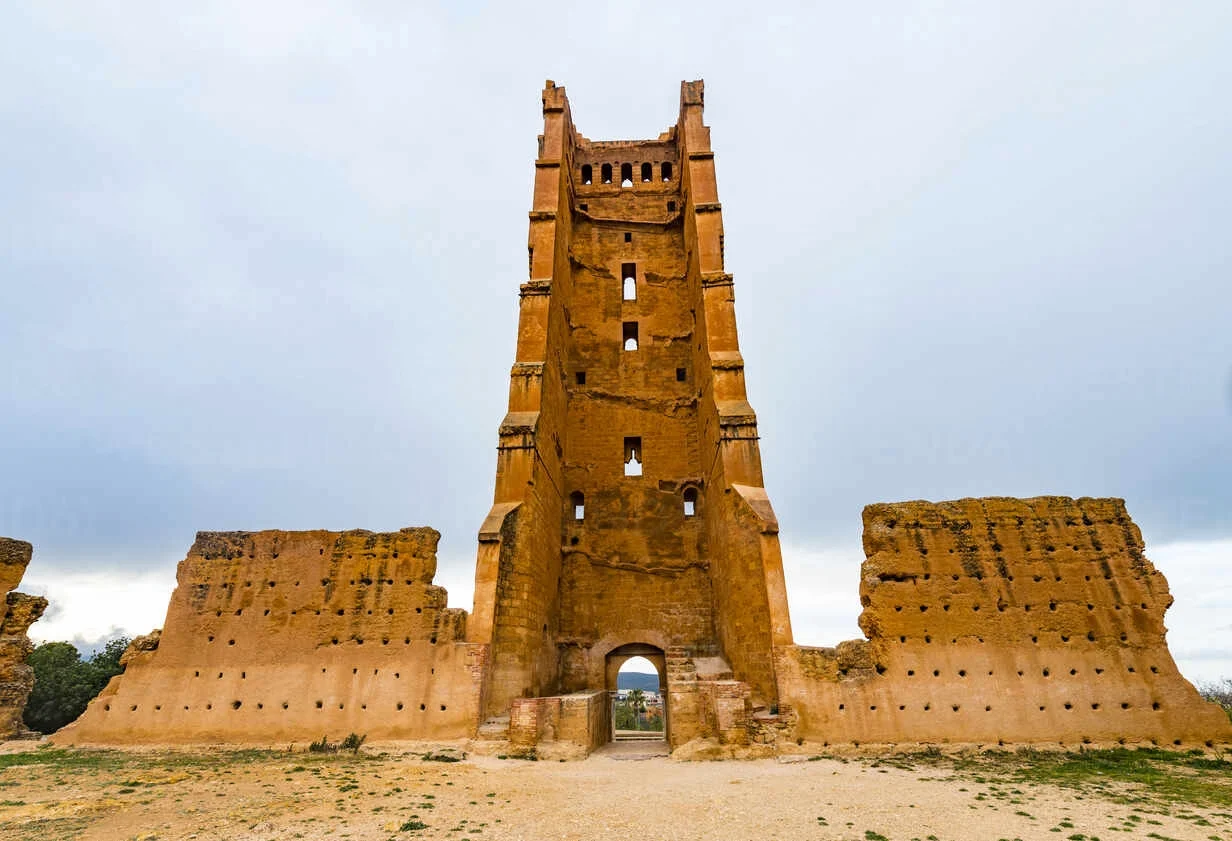
Mansourah Castle, or Qal'at al-Mansourah, is located on the outskirts of Tlemcen, west of Algeria, and is one of the most prominent historical landmarks reflecting the power of the Berber state in the 13th century. It was built by the Berber Sultan Abu Yaqub Yusuf in 1303 during his siege of Tlemcen, and served as part of an integrated military city bearing the same name, "al-Mansourah." The castle features massive walls, tall watchtowers, and large gates, with its most notable structure being the massive watchtower still standing today, resembling the Koutoubia Minaret in Marrakesh. Although most of the old city has collapsed, the remains of the castle still showcase the elegance of Moroccan-Andalusian Islamic architecture. Today, it is an open archaeological site that reflects a significant period in the history of central Morocco, making it a key destination for history and archaeology enthusiasts.
Start the virtual tour — external site
Caves of Ain el Fazza
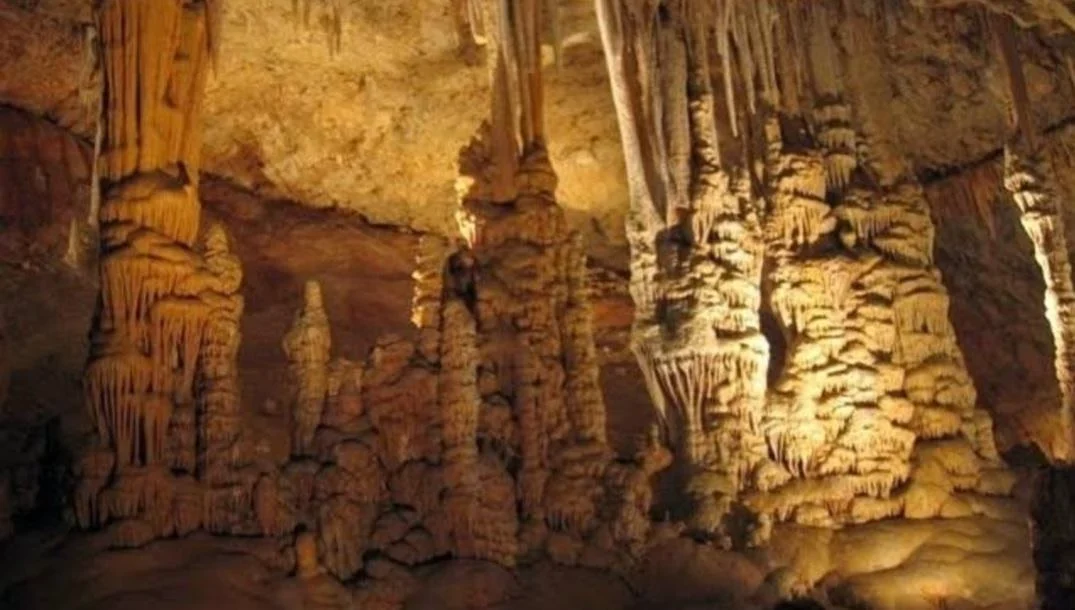
Ain Fezza Caves (also known as Beni Ada Caves) are located near the city of Tlemcen in western Algeria and are among the most prominent natural and tourist attractions in the region. These caves were formed over thousands of years through natural erosion, featuring stunning geological formations such as stalactites and stalagmites that adorn their walls and ceilings with beautiful natural artistic shapes. The caves extend to great depths, offering a unique exploration experience for adventure seekers and geology enthusiasts. The temperature inside the caves remains relatively constant throughout the year, making them a suitable destination regardless of the season. The site has been equipped with safe pathways and lighting that highlight the intricate details of the rock formations. Beni Ada Caves are a landmark that combines both tourist appeal and scientific significance, and deserves a visit for anyone passing through Tlemcen.
Start the virtual tour — external site
El Mechouar Palace
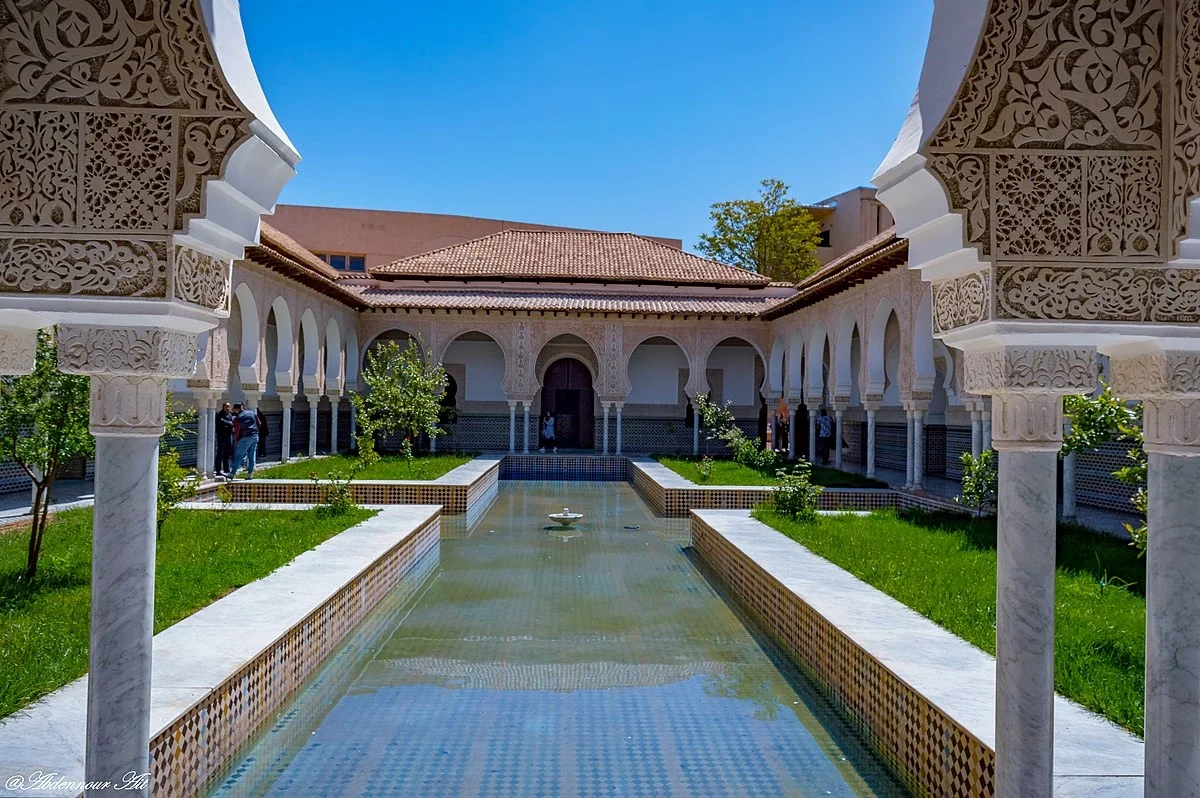
El Mechouar Palace (El Mechouar Palace) is an Andalusian architectural masterpiece located in the heart of Tlemcen, west of Algeria, and is one of the country's most important historical landmarks. The palace was built in the 13th century during the Zayanid Dynasty, serving as the residence for the Zayyanid rulers who governed the Kingdom of Tlemcen. Known for its unique design, the palace reflects the elegance of Andalusian-Islamic art through its ornate arches, gypsum carvings, and spacious courtyards featuring fountains and gardens. It served as a center for political and cultural decisions, housing several halls, mosques, and reception rooms. Over the centuries, the palace has undergone periods of destruction and restoration, yet it still preserves many of its original features. Today, El Mechouar Palace functions as an open museum and archaeological site, showcasing the grandeur and resilience of Islamic culture in Tlemcen.
Virtual tour is currently unavailable.
Mosque of Sheikh Boudaimin

Sidi Boumediene Mosque, in Tlemcen in western Algeria, is one of North Africa’s finest Andalusian Islamic monuments. It was built in the 14th century, in 1339, on the orders of the Marinid sultan Abu al-Hasan al-Marini, in honour of the Sufi saint and scholar Sidi Boumediene Chouaib El Ghaouth, who was buried at the same site. Its refined architecture combines Almoravid, Almohad and Marinid styles, with decorated arches, a spacious courtyard and a minaret with distinctive geometric ornamentation. The complex includes a school and a mausoleum, which made it an important religious and cultural centre in the Middle Ages. The mosque retains its splendour and authenticity today and is one of the leading historical monuments reflecting Tlemcen’s standing as a centre of learning and Sufism.
Source: National Tourism Office · Reference source